The Corridor That Forgot to Breathe
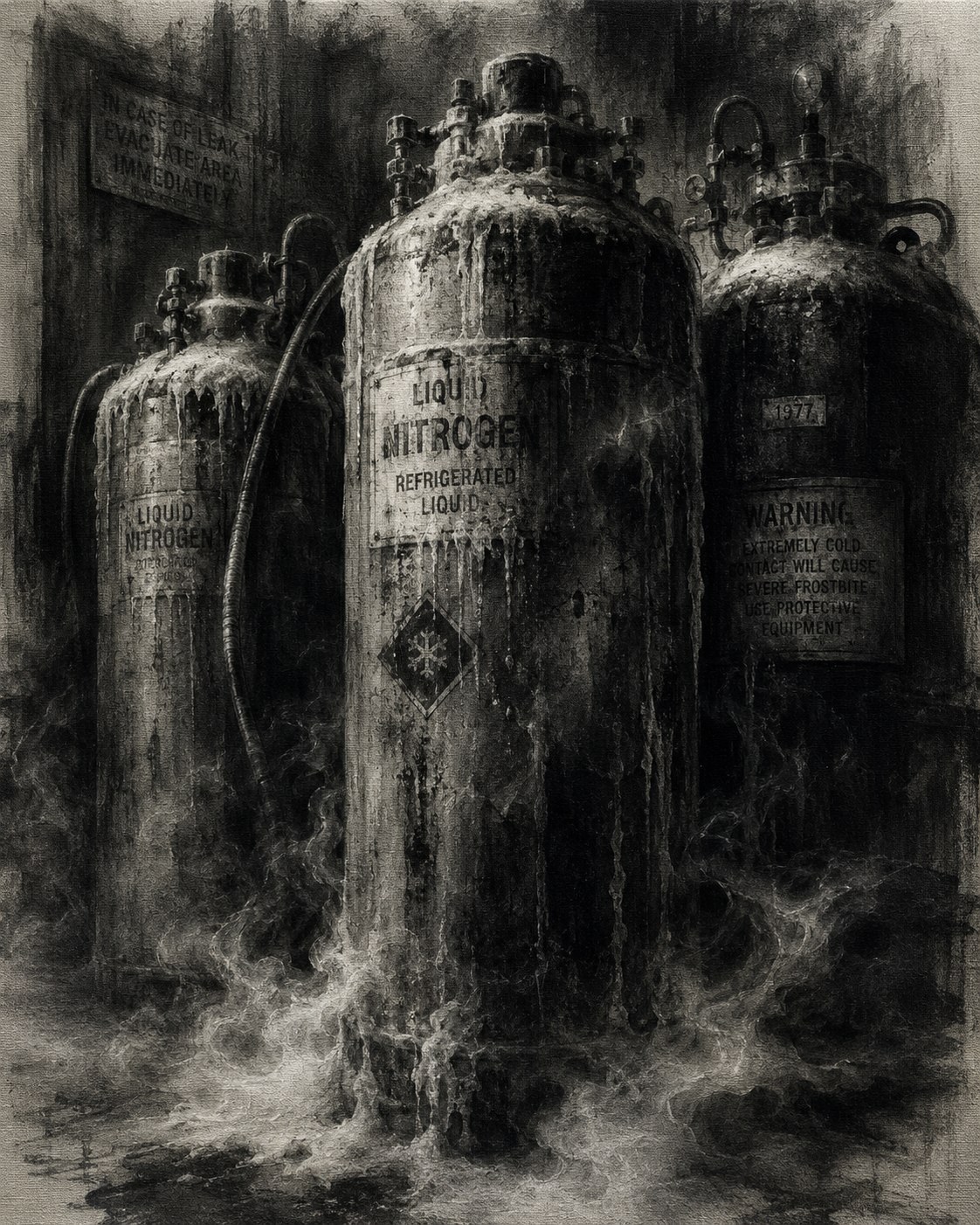
THIS IS A WORK OF FICTION
At half past six on a wet July evening, the tea stall outside Goabagan College had become the unofficial parliament of North Calcutta, which meant four plastic stools, one cracked biscuit jar, six opinions on cricket, three on politics, and a kettle that screamed as if it had been asked to pay income tax.
Rainwater ran down the tram wires and dropped from them in neat, bright ticks. The old houses leaned over the lane with their blackened balconies and sick green shutters, each one looking like it had heard a scandal in 1963 and never recovered. Posters of coaching centres peeled from the walls. “Guaranteed Placement,” said one, its smiling boy already eaten at the cheeks by damp. Beneath it, a stray dog slept on a sack of onions with the philosophical resignation of a retired judge.
Madhab Chatterjee stood under the blue tarpaulin of Bappa’s stall, holding a clay cup of tea gone cold in his fingers.
“Dada, drink it before it becomes archaeology,” Bappa said.
Madhab did not hear him at first. Across the road, four students were laughing under one umbrella, all elbows and backpacks and wet hair. They were second-year chemistry boys, though to Madhab all students now looked like the same species: young, hungry, unreasonable, immortal.
One of them called, “Madhab-da! Practical marks have gone?”
“Marks don’t go,” Madhab said automatically. “Marks are entered.”
This produced laughter, because students love any adult who sounds like a malfunctioning government notice. The boys ran toward the metro entrance, splashing through a pothole where a little paper boat, made from a tuition receipt, went bravely to its doom.
Then the power went out.
Not everywhere. Just enough. The tea stall bulb died. The college gate turned into an iron drawing against the violet evening. The metro sign kept glowing below, a cold white M, because the underworld in Calcutta is often better funded than the surface.
From the stair mouth came a sound Madhab would remember for the rest of his life.
Not a scream.
A crowd makes a scream when it understands danger. This was earlier than understanding. A soft upward confusion. Several voices asking different questions at once, followed by a silence that seemed to bend the rain around itself.
Bappa lifted the kettle from the stove.
“What happened?”
A young woman stumbled out of the metro entrance, one sandal missing, face grey with a kind of insulted astonishment.
“Air,” she said.
Then she folded at the knees.
By the time Madhab reached the stairs, people were already pushing upward, not running, because the passage was too narrow for panic to have proper manners. A security guard shouted, “Move slowly! Move slowly!” while moving faster than anyone. A child cried from somewhere below. The smell that rose from the passage was not smoke, not gas, not drains.
It was nothing.
That was the terror of it. An absence with a cold edge.
Madhab took three steps down and felt his chest make a small private decision against him. His breath did not burn. His eyes did not water. The body, which complains so loudly about acidity, mosquito bites, and long queues, gave him no useful warning. It simply declined to continue.
Someone hauled him back by the collar.
“Are you mad?” Bappa shouted. “You want to become breaking news?”
Later, the papers would say twelve died. Then fourteen. Then seventeen. Then, after one boy in intensive care stopped being interesting to the doctors and became interesting to the gods, eighteen.
Seven were from Goabagan College.
By midnight, television vans had arrived like vultures with hair gel. By morning, ministers had promised inquiry, compensation, better ventilation, stricter protocols, and deep sorrow. Deep sorrow in India has a rate card. It is measured in garlands, ex gratia amounts, and how long a man in white kurta can keep his head bowed before looking at the camera.
Madhab was the college accounts clerk. Fifty-two, widower, diabetic, one daughter married in Siliguri, one room in a crumbling house near Hedua where the ceiling fan turned with the courage of a wounded pigeon. His wife, Mita, had died three years earlier after a fever that every doctor first called “nothing” and then, with increasing fees, “complicated.” Since then he had acquired the habit of apologizing to empty rooms.
He had also acquired another habit. He noticed unpaid people.
The unpaid always move differently. They carry their own invisibility like a second bag. Contractors, lab cleaners, guest lecturers, security guards, the woman who brought phenyl, the old man who repaired burners, the young assistant in the low-temperature lab whose name nobody said properly.
Ritoban.
Or Rito, to the students.
He was twenty-six, thin as a matchstick, with careful handwriting and the face of someone who had been praised too early in life and billed too late. His father had driven a taxi until a stroke parked him permanently on a cot in Barasat. His mother stitched falls on saris. Ritoban had topped his college once, then done an MSc, then returned as a temporary lab assistant on a stipend that existed on paper with the elegance of Mughal architecture and the reliability of a politician’s umbrella.
For five months he had not been paid.
Madhab knew because Ritoban had come to him every Thursday.
“Sir, any news?”
“File has gone to bursar.”
“Bursar said file is with you.”
“Bursar says many things. Last week he said he is dieting while eating kachori.”
Ritoban would smile faintly, ashamed of needing money, which is one of the stupidest shames society trains into decent people. A boy may pose with borrowed sunglasses and rented dignity, but asking for salary owed to him makes him feel like a beggar at his own wedding.
The day after the deaths, the police sealed the metro passage and questioned everyone who had ever touched a cylinder, signed a requisition, or looked nervous near a switch. They came to the college with notebooks and thin patience. The principal, Dr. Sushmita Ray, received them in her office beneath a framed photograph of Tagore wearing the expression of a man forced to bless committee minutes.
“Of course we will cooperate fully,” she said.
Madhab was called in to produce purchase records.
“Cryogenic supplies,” said the inspector, a square man named Ajit Sen. “Last six months.”
Madhab pulled ledgers from the steel cupboard. The room smelled of damp paper and old authority. Dr. Ray watched him too closely.
“Take copies only,” she told the inspector. “Originals are institutional property.”
“So are dead students,” Sen said.
The principal’s face tightened.
Madhab liked Sen immediately, which made him suspicious. Policemen who speak well in the first meeting often speak differently in the third.
The records showed three large silver cylinders delivered to the old physics annex two days before the incident. Officially they were for a demonstration jointly arranged by the chemistry and physics departments. Unofficially, nobody remembered approving anything. The requisition bore the signature of Professor Arindam Bose, head of chemistry, who was at that moment in Bhubaneswar attending a conference on sustainable science and unsustainable hotel buffets.
“It was routine,” Dr. Ray said. “Such materials are handled regularly.”
“By whom?” Sen asked.
Dr. Ray did not answer quickly enough.
“Ritoban,” Madhab said.
The name entered the room and lowered the temperature.
Ritoban had not been seen since the evening of the accident.
That night, Madhab found the first note in his office drawer. It was folded into a square and placed under the stapler. The paper was from the lab register, blue-lined, with the college stamp faintly visible.
Madhab-da,
You once told me files breathe slower than people. You were wrong. Files do not breathe at all, and perhaps that is why they survive us.
Please do not let them say it was only madness.
R.
Madhab sat for a long time with the note open before him. Outside, the college corridor emptied into its usual after-hours personality: lizards, echo, a sweeper’s bucket, the sour smell of wet socks abandoned by students who had no fear of fungus or God.
He should have taken the note to the police.
Instead he put it in his shirt pocket.
This was not loyalty. He told himself it was not. It was only the old middle-class instinct to delay disaster until tea. In Bengal, apocalypse itself would be asked to sit, have muri, and wait for someone senior to return from lunch.
The second note came the next morning, slid under the accounts office door.
You saw the arrears list. You know who signed “pending clarification.” Ask why my name was moved from salary to contingency.
Madhab opened the old payroll sheets.
There it was. Ritoban’s stipend had not merely been delayed. It had been reclassified. Temporary academic support. External contingency. Laboratory assistance honorarium. Each phrase a small clean coffin. Once renamed, a payment could wander through bureaucracy until it died of natural causes.
At the bottom of one sheet was Madhab’s own initial.
M.C.
He remembered the day. The bursar, Banerjee, had come in sweating and cheerful.
“Just initial here, Madhab-babu. Small adjustment. Audit language.”
“What adjustment?”
“Don’t become Supreme Court. Principal has approved.”
Madhab had initialed. He had been thinking of insulin strips, electricity bill, his daughter’s message asking if he could send something for the grandson’s school admission. A life has many small knives; one does not always notice which blade cuts another man.
He went to the lab annex after lunch.
The old building stood behind the main block, half-swallowed by moss and institutional neglect. A banyan root had entered one wall as if applying for permanent residency. Inside, glass cabinets held specimens, cracked meters, dusty coils, a human skeleton named Subhash by generations of students, and several locked cupboards with keys that existed in theory.
Ritoban’s little desk was near the back. On it lay a chipped mug, a packet of glucose biscuits, a bus ticket from Barasat, and a notebook.
Madhab opened it.
Most pages were ordinary. Inventory, dates, neat columns, reminders: wash Dewar, check regulator, label samples, call Ma. Then, near the end, the handwriting changed. Not messy. More careful.
No one hears suffocation. Fire gets respect because it performs. Water gets respect because it rises. Lack of air is treated like laziness. The body simply sits down and becomes a problem for someone else.
Below that:
They will say I am depressed. They will say unpaid youth are emotional. They will say safety failure. They will say impossible to anticipate. In this country nothing is anticipated except elections and marriage expenses.
Madhab turned the page.
The next sheet had only names.
Not the dead students. Administrators.
Dr. Sushmita Ray. Bursar Banerjee. Professor Bose. M.C.
His own initials again.
A sound came from the storage room.
Madhab froze.
“Who’s there?”
The door was half-open. Inside, old apparatus crowded the shelves in shapes that suggested traps. A white vapour crawled briefly along the floor and vanished. His heart kicked once, hard.
“Rito?”
Something moved behind the cylinders.
Madhab stepped back, knocked into Subhash the skeleton, and sent one yellowed hand clattering to the floor. Even in terror, Calcutta insists on comedy.
A boy emerged from the storage room.
Not Ritoban. One of the surviving students. Thin, bandage on his forehead, eyes too large for his face.
“Sir,” he whispered.
“Anik? What are you doing here?”
Anik had been in the metro passage that evening. He had lived because a stranger had pushed him upward and fallen in his place.
“I came for my bag,” he said.
“No classes. College is closed.”
“My lab copy is here.”
“Your friends died and you came for lab copy?”
Anik’s mouth trembled.
“Ma says if year loss happens, all this dying will become completely useless.”
There it was. The Indian parent’s tragic arithmetic. Even grief must not interfere with syllabus.
Madhab softened.
“Go home.”
“Sir, Rito-da was here that day.”
Madhab looked at him.
“In college?”
“No. In metro. I saw him near the passage before the stoppage. He looked at us. I called him. He did not answer.”
“Did he carry anything?”
Anik shook his head.
“He was crying.”
That should have settled something. Instead it unsettled everything.
That evening Madhab took the notes to Inspector Sen.
Sen read them in silence at a tea shop because the police station was full of men shouting into phones and one goat rescued from a traffic dispute.
“You withheld evidence,” Sen said.
“Yes.”
“Why?”
“I am Bengali. We convert action into thought first.”
Sen looked at him.
“Also my initials are in his notebook.”
“Ah.”
“I did not know.”
“Nobody knows. That is how these things work.”
Sen tapped the paper. “We searched his room in Barasat. He is missing. Mother says he left before dawn two days ago. Father cannot speak. Neighbours say good boy. Everyone is a good boy after police arrive.”
“Do you think he did it?”
Sen sipped tea.
“I think somebody wants me to think he did it.”
The third note arrived at Madhab’s house that night.
It was on his pillow.
He found it after unlocking his room, switching on the tube light, and seeing the folded square lying where his head usually surrendered. The window grille was intact. The door had been locked. The ceiling fan turned slowly above it, stirring the hot room.
Madhab did not touch the note at first.
His wife’s photograph watched from the wall. Mita in a red sari, laughing at something outside the frame. Since her death, Madhab had often felt judged by that photograph, though Mita in life had judged mainly the price of fish and the emotional maturity of his relatives.
Finally he opened the note.
You were kind to me because kindness cost you nothing. When kindness became paperwork, you initialed.
Ask who called the metro control room.
Madhab sat down on the bed.
The city outside was alive with evening noises: pressure cooker whistles, television serials, a bicycle bell, a distant conch from someone’s puja room, a quarrel about parking that had achieved mythic intensity. Ordinary life, that great shameless animal, kept eating.
He called Sen.
The inspector did not sound surprised.
“Come tomorrow morning,” Sen said. “And don’t sleep alone.”
“I always sleep alone.”
“Then don’t sleep confidently.”
In the morning, Dr. Ray summoned Madhab.
She was not alone. Bursar Banerjee sat beside her, his forehead shiny, his gold ring tapping the armrest. Professor Bose had returned from Bhubaneswar with a conference bag and the expression of a man who had found tragedy waiting rudely in his inbox.
“Madhab-babu,” Dr. Ray said, “the police are asking unnecessary questions. We must present a united institutional position.”
“United with truth or without?”
Banerjee sighed. “Don’t be dramatic. A mentally unstable temporary staff member mishandled hazardous material. Very sad. We will help his family also. Matter closed.”
“Ritoban did not call the metro.”
Professor Bose looked up sharply.
Dr. Ray said, “What?”
“Someone arranged for that train to halt near the corridor.”
Banerjee’s ring stopped tapping.
“Nonsense,” he said.
Madhab looked at Bose. “Sir?”
Bose removed his glasses. His eyes were red.
“He came to me,” Bose said. “Ritoban. Last week. He said if he wasn’t paid, he would go to the press. He had documents. He had recordings.”
Dr. Ray stood. “Arindam.”
“No,” Bose said. “Enough.”
Banerjee’s face hardened. “Careful.”
Bose laughed once, miserably. “Careful? Eighteen children are dead and you are still filing caution?”
The room changed. Fear moved from one body to another, trying on each face.
“Ritoban threatened scandal,” Bose said to Madhab. “Not murder. Scandal. He said he would show how funds were being moved. His stipend, equipment grants, maintenance bills. Small thefts, respectable thefts. The kind that wears perfume.”
Dr. Ray whispered, “You signed too.”
“Yes,” Bose said. “I signed too.”
Banerjee rose. “This is defamatory.”
“Sit down,” Inspector Sen said from the doorway.
He entered with two constables and the weary satisfaction of a man who has been waiting in a corridor long enough to hear the correct sentence.
Banerjee tried bluster first, then illness, then patriotism. None served him. From his drawer Sen’s men recovered a second phone, cash in envelopes, and photocopies of requisitions with forged initials. From Bose’s conference bag came a pen drive he had apparently been too frightened and too decent to destroy. It contained recordings of meetings in which Banerjee discussed “teaching the boy a lesson,” “creating a safety narrative,” and “using the city’s own confusion.”
Nobody said exactly how the corridor had been made deadly. Even in confession, men protect method more carefully than morality.
“Where is Ritoban?” Madhab asked.
Banerjee looked genuinely puzzled.
“Dead, probably. He ran.”
Sen stared at him.
“You don’t know?”
For the first time, Banerjee seemed afraid.
“I thought he—”
The lights flickered.
A coldness entered the principal’s office.
It began near the floor, as it had in the lab, as it had in the metro passage: not wind, not mist exactly, but the visible edge of something absent. Papers on the desk curled. Dr. Ray made a small sound and stepped back. The photograph of Tagore clouded from inside the glass.
On the floor, in damp footprints, words appeared.
Not written. Condensed.
ASK WHO PUSHED ANIK.
Madhab’s legs weakened.
He saw again the surviving boy in the lab, bandage on his forehead, saying a stranger had pushed him upward and fallen in his place.
Sen turned to a constable. “Bring the student.”
But Madhab was already moving.
He found Anik at the tea stall, where he sat with a notebook open and nothing written in it. The boy looked smaller in daylight, as if survival had shrunk him.
“Who pushed you?” Madhab asked.
Anik blinked.
“I don’t know.”
“Think.”
“I told police. Some man.”
“You saw him?”
The boy’s eyes filled.
“He was behind us. When everyone stopped breathing. People were falling. I couldn’t move. Then someone hit my back and pushed me upward. Hard. I fell on the stairs. I looked back.”
“And?”
Anik wiped his nose with the back of his hand, suddenly a child.
“Rito-da,” he said. “But that is impossible. Police said he did it.”
Madhab sat beside him.
“What did he say?”
“He said, ‘Run, you idiot.’”
That evening, Sen’s men found Ritoban.
Or what remained available to official language.
He was in a service alcove off the metro passage, behind a panel that had been opened by force from inside. He had died with one hand caught in a grille and his shoulder wedged against the gap, as if he had used his own body to hold something open or closed. In his pocket was an envelope addressed to the press, damp but legible. Inside were copies of forged requisitions, unpaid wage records, and a note.
I wanted to frighten them. I wanted scandal, not death. If anything happens, ask Banerjee. Ask why the corridor stopped. Ask why safety doors were locked. Ask why everything in this country is treated as adjustable except a poor man’s hunger.
There was one more line, written crookedly.
If students are there, I will try.
For three days the city loved Ritoban.
His photograph appeared in newspapers: thin young man, serious eyes, unfortunate moustache. HERO LAB ASSISTANT EXPOSES CORRUPTION. Then the city moved on, because outrage in Calcutta has stamina only when accompanied by fish fry. Compensation was announced. Banerjee was arrested. Dr. Ray resigned for health reasons, which is how powerful people describe consequences. Professor Bose gave testimony and aged ten years in a week.
Madhab returned to work.
The accounts office felt smaller. The steel cupboard still jammed. The ceiling still leaked into a bucket during rain. Files still arrived with their meek, murderous patience.
He prepared Ritoban’s pending salary bill himself.
Five months’ stipend. Travel allowance. Overtime. A small arrear correction. The amount looked obscene in its modesty. Less than what one ministerial visit spent on banners. Enough to have bought medicines for a father, rice for a family, one young man’s belief that the world had not entirely spat him out.
He signed the file and carried it to the new acting principal.
“Process immediately,” he said.
The acting principal, a nervous historian, nodded.
“Of course, of course.”
“No,” Madhab said. “Not of course. Today.”
On his way back, he passed the lab annex. The door was open. Inside, Anik and two other students were cleaning benches under a teacher’s supervision. Life had resumed its vulgar little march: attendance, practicals, tea, fear, ambition. A city cannot pause long; if it does, the drains win.
At Ritoban’s desk, someone had placed a marigold in a beaker.
Madhab stood there until the students left.
Then he saw the notebook.
It lay open though he was certain it had been taken by police. The page was blank except for one sentence in the old neat handwriting.
Files breathe when someone carries them.
Madhab touched the paper.
From the storage room came a faint cold sigh.
Not threatening. Not peaceful either. A corridor does not become holy because people died in it. A wronged man does not become a saint because he saved one boy after helping danger take shape. The dead are not moral decorations for the living. They are accounts left open.
Madhab lifted the notebook and placed it under his arm.
Outside, evening gathered over Calcutta with its usual damp magnificence. The tea stall kettle screamed. Bappa abused the milk supplier. A tram bell rang somewhere like an old memory refusing retirement. Students hurried toward the metro entrance, laughing too loudly, because youth must insult death or it cannot function.
Madhab watched them go down the stairs.
For one second, at the mouth of the passage, the air whitened.
The students did not see it. But Madhab did. In the brief cold veil stood Ritoban, thin, anxious, unpaid, one hand raised like a clerk asking for attention.
Then the figure turned and went below, not to harm, not to forgive, but to stand where the city had forgotten to breathe.
Madhab followed with the file pressed against his chest.